

Empty cart
Oh no! It appears your cart is empty. Add some almonds to your daily regime with the Treehouse products.
All Blog PostsNews


When it comes to almond ingredients, form matters. Whether you’re developing a crunchy snack topping, a soft-baked cookie, or a clean-label cake mix, choosing between diced almonds, sliced almonds, and almond flour can impact everything from texture and flavor to nutritional claims and consumer appeal.
It’s worth noting that food trends show that plant-based products are becoming increasingly popular. Innova Market Trends Insights brings food and beverage trends to the industry and finds that consumers are now seeking out plant-based, naturally derived functional ingredients to improve health and well-being.
In this guide, we break down the differences between these three essential almond formats and explore their best applications in food manufacturing.
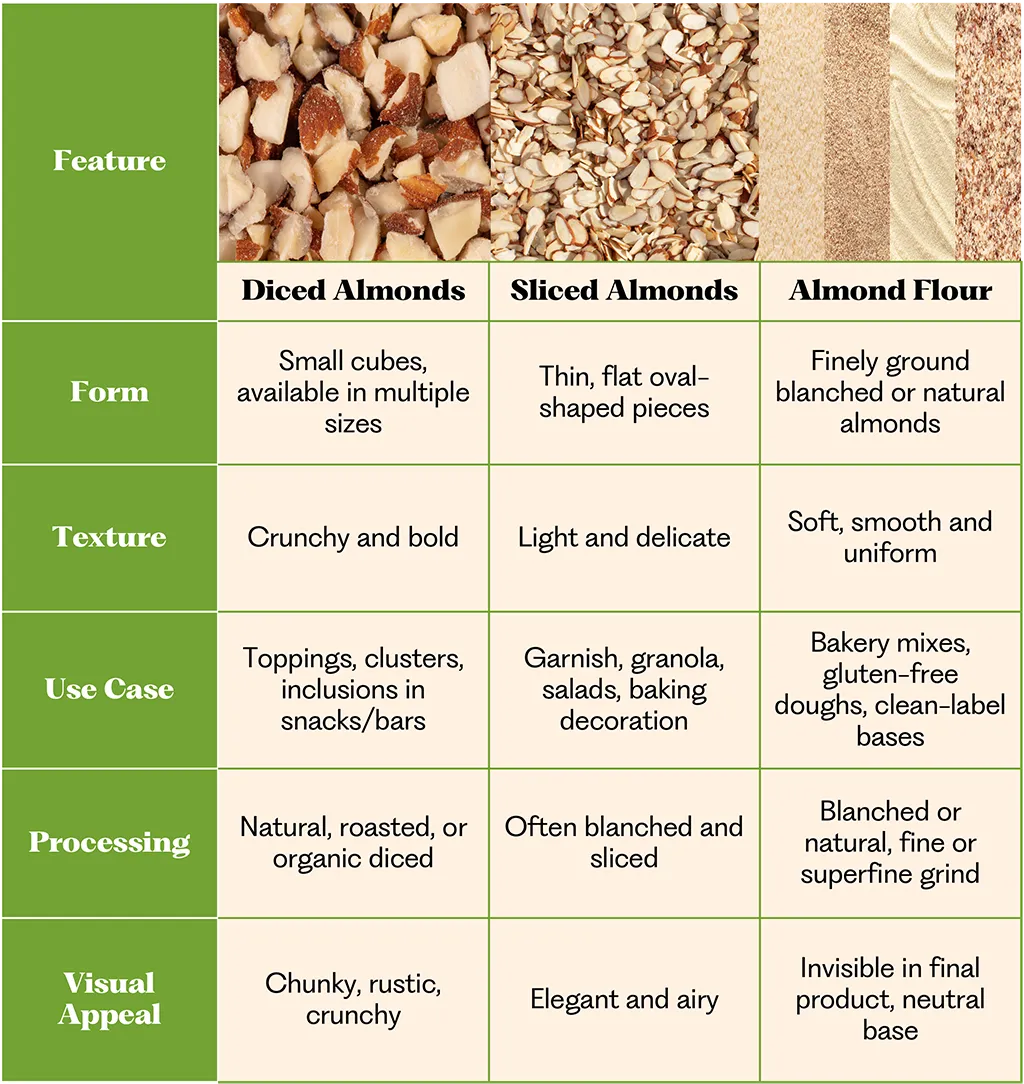

Ideal for applications that require texture, crunch, and visual interest, such as:
At Treehouse, we provide diced almonds in a variety of sizes, ensuring zero waste and full process efficiency, perfect for high-performance food manufacturing.

Best for adding a delicate crunch and sophisticated look:
Pro tip: Sliced almonds are often blanched, removing the skin for a smoother appearance and lighter flavor profile.

A functional favorite in:
Treehouse offers superfine almond flours that are high in protein and low in carbs, perfect for clean-label recipes.
No matter which format you choose, all Treehouse almond ingredients come with the assurance of:
We help brands deliver clean-label, better-for-you products — with the right almond format for every idea.
At Treehouse California Almonds, we work closely with farmers and food brands to deliver diced, sliced or almond flour that meet high standards for nutrition, taste, food safety and appearance.
Our vertically integrated processes ensure traceability, consistency and minimal breakage while preserving the natural integrity of the almond.
Let’s innovate together. Visit treehousealmonds.com or talk to our team about which almond format best fits your application.
sales@treehousealmonds.liona.ag
Source:
Stay tuned for the release of significant almond industry information, such as almond crop estimates and acreage reports. You’ll also find Almond Board shipping reports and related analysis from the Treehouse Almonds Leadership Team.
Be in the loop for vital news about the California almond market.
Enjoy 10% off when you order 6 or more